Autism in Nigeria: Why So Many Children Are Getting Diagnosed Late and What It's Costing Them
 Attah Oluchukwu Vivian
 Autism in Nigeria: Why So Many Children Are Getting Diagnosed Late and What It's Costing Them

There is a two-year-old boy in Ibadan who hasn't said a single word yet. He doesn't look up when his name is called. He spends hours arranging his toy cars in perfectly straight lines and screams when anyone touches them.
His grandmother says he's a late talker. His uncle says he's stubborn. The pastor says it's spiritual. So the family fasts, prays, and visits a prophet.
Nobody takes him to a doctor.
This story is not unusual. Across Nigeria, it plays out in thousands of homes every single year. And by the time many of these children finally see a specialist, they are five, six, sometimes nine years old. The window where early support makes the biggest difference has already quietly closed.
What Is Autism and Why Does It Matter?
Autism spectrum disorder, or ASD, is a condition that affects how the brain develops. It changes how a person communicates, connects with others, and experiences the world around them.
Think of it this way. Most people's brains process social cues, sounds, and emotions the way a main road handles traffic. Steady flow, expected patterns, familiar signals. An autistic brain processes those same things on a completely different road system. Not broken. Just built differently.
It's called a spectrum because autism looks different in every single person. Some autistic children don't speak at all. Others talk non-stop but struggle to read a room. Some are academically gifted. Others need support for basic daily tasks. There is no single face of autism.
The World Health Organization estimates that about 1 in 100 children globally has autism. In Nigeria, estimates suggest that roughly 0.8-1.2% of children are on the spectrum. That translates to over 600,000 children, most of whom have never received a diagnosis.
Why Nigerian Children With Autism Are Getting Diagnosed Late
Cultural Beliefs That Delay Autism Diagnosis in Nigeria
When a Nigerian child doesn't talk on time, doesn't make eye contact, or behaves in ways that seem unusual, the first explanation in most communities is rarely medical. It's spiritual.
Autism in Nigeria is frequently described as a curse, a punishment for a parent's past sins, or evidence of witchcraft. Children have been called "snake children" or said to be possessed. Mothers get blamed. Families feel shame. And instead of going to a hospital, they go to a prayer house.
This isn't about dismissing faith. It's about what happens when spiritual explanations become the only explanation. Children lose years they cannot get back.
Lack of Trained Specialists Across Nigeria
Even when a family is ready to seek help, the system often isn't ready for them.
Nigeria has a serious shortage of developmental pediatricians, child psychiatrists, and speech therapists. The specialists who do exist are concentrated almost entirely in Lagos, Abuja, and Ibadan. For a family in rural Kebbi or Benue, getting to a qualified professional means long travel, high cost, and time most families cannot afford.
Research shows that nearly 70% of surveyed healthcare practitioners in Nigeria lacked awareness of referral pathways for autism. Many general practitioners misdiagnose it as ADHD, hearing loss, or general learning difficulty. The child gets the wrong label, the wrong support, and falls further behind.
What Schools Are Missing
For many Nigerian children, the first real red flag gets raised not by a parent or a doctor but by a teacher who runs out of patience.
A child who can't sit still, ignores instructions, or seems completely disengaged from class gets labeled stubborn or slow. The possibility of a neurodevelopmental condition never gets explored. Nigeria's school system has very limited tools to identify or support children whose brains work differently from the majority.
Signs of Autism Nigerian Parents Are Taught to Ignore
Early Signs of Autism in Babies and Toddlers
Not making eye contact by 6 months
Not responding to their name for 12 months
No babbling or pointing by 12 months
No single words by 16 months
No two-word phrases by 24 months
Repetitive movements like hand flapping, rocking, or spinning
Intense distress when daily routines change even slightly
Losing language or social skills they previously had
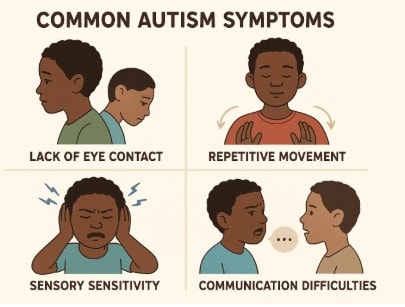
Any one of these on its own might mean nothing. Several together, consistently, are worth taking to a doctor immediately.
Why Girls With Autism Get Missed Even Longer
Research shows girls are diagnosed with autism later than boys almost everywhere. In Nigeria, the gap is even wider.
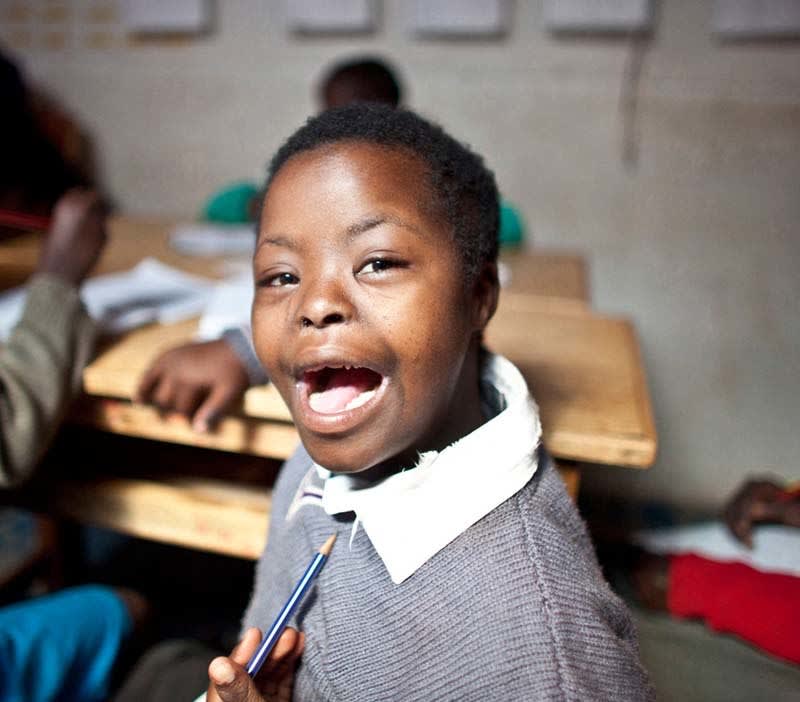
Girls tend to observe and copy social behavior around them naturally. They mask their struggles more effectively. So while a boy's autism might become visible through behavior that disrupts a classroom, a girl's autism hides behind apparent shyness or compliance until the weight of masking becomes too heavy to carry.
By the time many Nigerian girls get diagnosed, they have spent years performing normalcy while receiving zero support for what's actually happening inside them.
What Late Diagnosis Actually Costs a Child
The Developmental Window That Doesn't Come Back
The first three to five years of a child's life are when the brain is most flexible and most responsive to learning. Early intervention during this window, speech therapy, behavioral support, and structured learning, produces outcomes that intervention at age eight or nine simply cannot replicate.
One key Nigerian study found that parents first notice something different about their child at around 22 months on average. The actual diagnosis comes nearly two years later, at around 44 months. In rural areas, children are sometimes not diagnosed until age eight or nine.
That gap is not just numbers. It is a language that hasn't developed. Social skills that didn't form. Confidence that I never had a chance to build.
The Emotional and Financial Toll on Families
Raising an undiagnosed autistic child in Nigeria without support, without answers, and without community understanding is exhausting in ways that are hard to describe.
Caregivers report burnout, depression, financial strain, and deep social isolation. Therapy costs in Nigeria have been reported at N350,000 to N600,000 per quarter, inflation-adjusted higher today. For most Nigerian families, that number is completely out of reach.
And the stigma doesn't stay with the child. It spreads to the entire family. Relatives distance themselves. Neighbors gossip. Mothers carry guilt for a condition they did not cause and could not have prevented.
What Parents Can Do Right Now
Where to Seek an Autism Diagnosis in Nigeria
Lagos: Lagos University Teaching Hospital (LUTH) and Lagos State University Teaching Hospital (LASUTH)
Abuja: The National Hospital offers developmental assessments
Ibadan: University College Hospital pediatric neurology unit
Nationwide: The Autism Society of Nigeria provides referral guidance and connects families to support networks
How to Advocate for Your Child
Write down every behavior you're concerned about when it started. How often does it happen? How intense it gets. Bring those notes to every appointment. If one doctor dismisses your concerns, find another. You are not overreacting. You are doing exactly what your child needs you to do.
What Nigeria Needs to Change
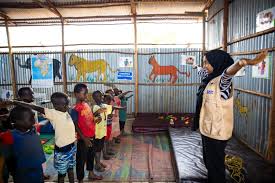
Autism screening needs to move into routine child health visits, not stay locked behind specialist clinic doors that most families can't reach. Community health workers need basic training in developmental red flags. Teachers need tools to recognize neurodevelopmental differences before they default to discipline.
Most importantly, communities need accurate information. Autism is not caused by witchcraft, maternal sin, or spiritual failure. It is a neurodevelopmental condition with genetic and environmental contributors. It responds positively to early, consistent, appropriate support.
Children who get that support early live fuller, more independent lives. Children who don't, don't.
Conclusion
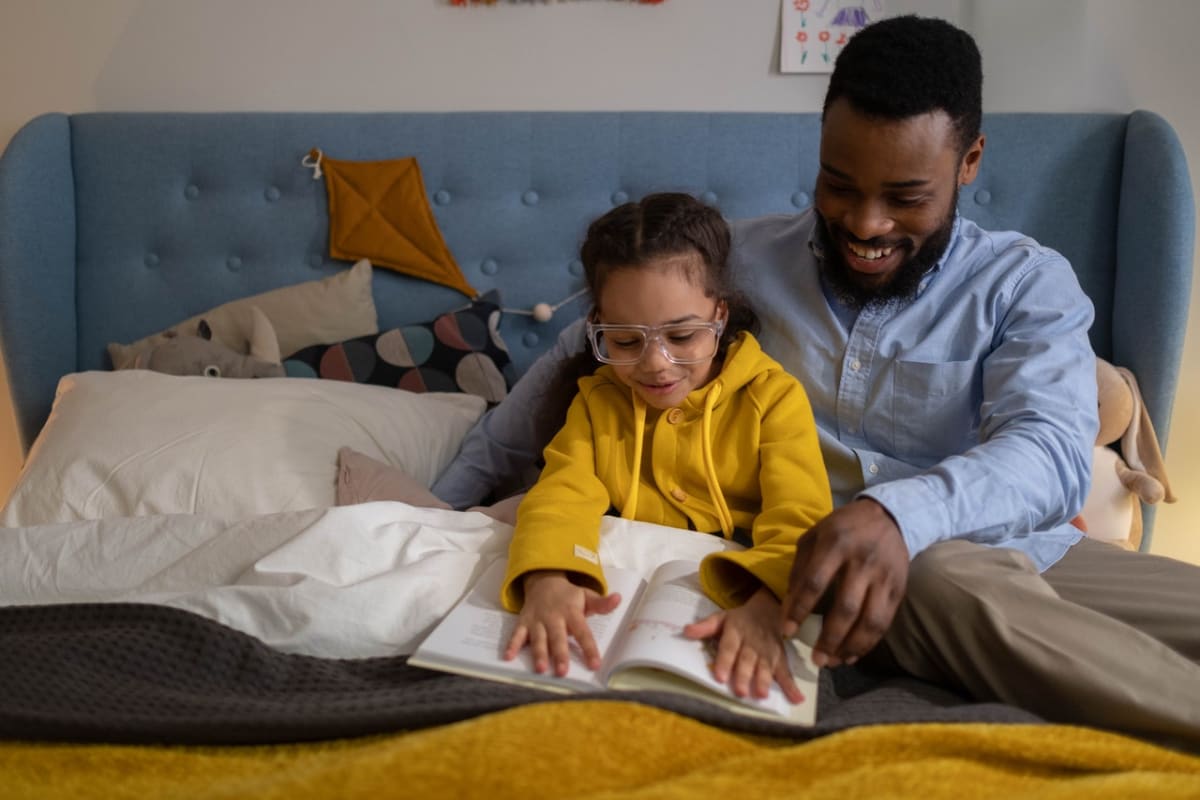
If you are a Nigerian parent reading this and recognizing your child in these words, you are not at the beginning of a tragedy. You are at the beginning of understanding.
The diagnosis is not the worst thing. The worst thing is another year passing without one.
Keep pushing for answers. The system is imperfect. The stigma is real. But your child deserves a parent who refuses to stop asking questions until someone actually listens.